Territory
The Kanien'kehà:ka people, meaning “the People of the Flint”, are part of the larger Iroquois Confederacy. Their traditional way of life was semi-sedentary and based on agriculture and hunting. Women took care of the crops, while men hunted and fished.
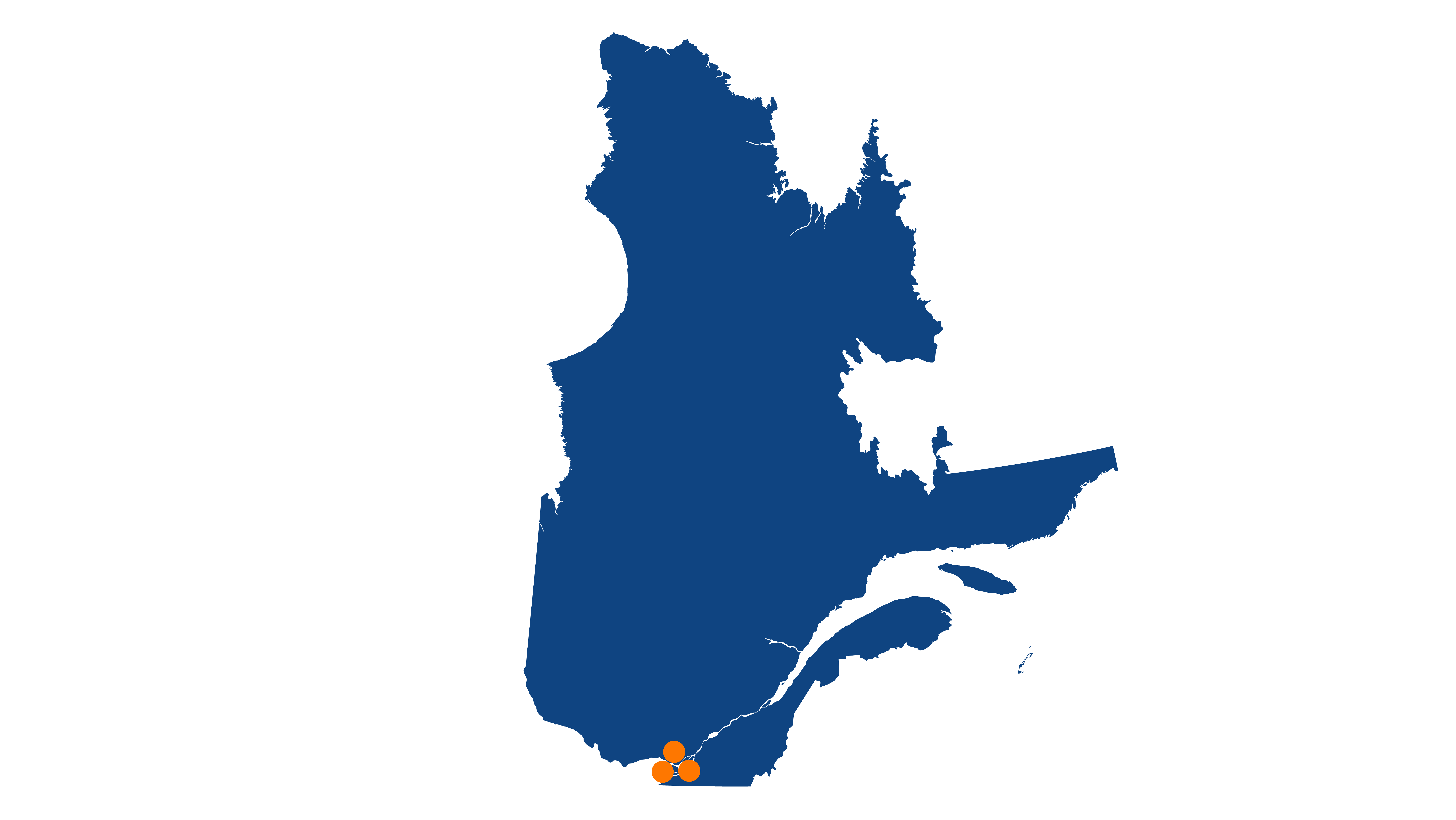
Community life was structured around longhouses. The Kanien'kehà:ka community of Kahnawake, which means “place of the rapids,” is located on the south shore of the St. Lawrence River near Montréal. Akwesasne overlaps the border between Ontario and New York State in the Montérégie region. Kanesatake is located at the confluence of the Ottawa River and Lake Deux-Montagnes, enclosed within the town of Oka.
.avif)
Language
The Kanien'kéha language is highly descriptive and is the cornerstone of culture and identity in the daily life and ceremonial contexts of the Kanien'kehà:ka people. It is a language of the Iroquoian family, spoken mainly in Quebec, Ontario, and New York State. Speakers have been recognized for centuries for their rich repertoire of oratorical styles. On average, Kanien'kéha words tend to be longer than words in English or French. They are composed of a large number of morphemes (meaningful elements), a characteristic known as polysynthesis. Nouns are often incorporated into verbs, and words are ordered according to their relative importance at a given moment.
.avif)
Discover other nations

Stay up to date with our newsletter
Be the first to know about events and updates!