Innus

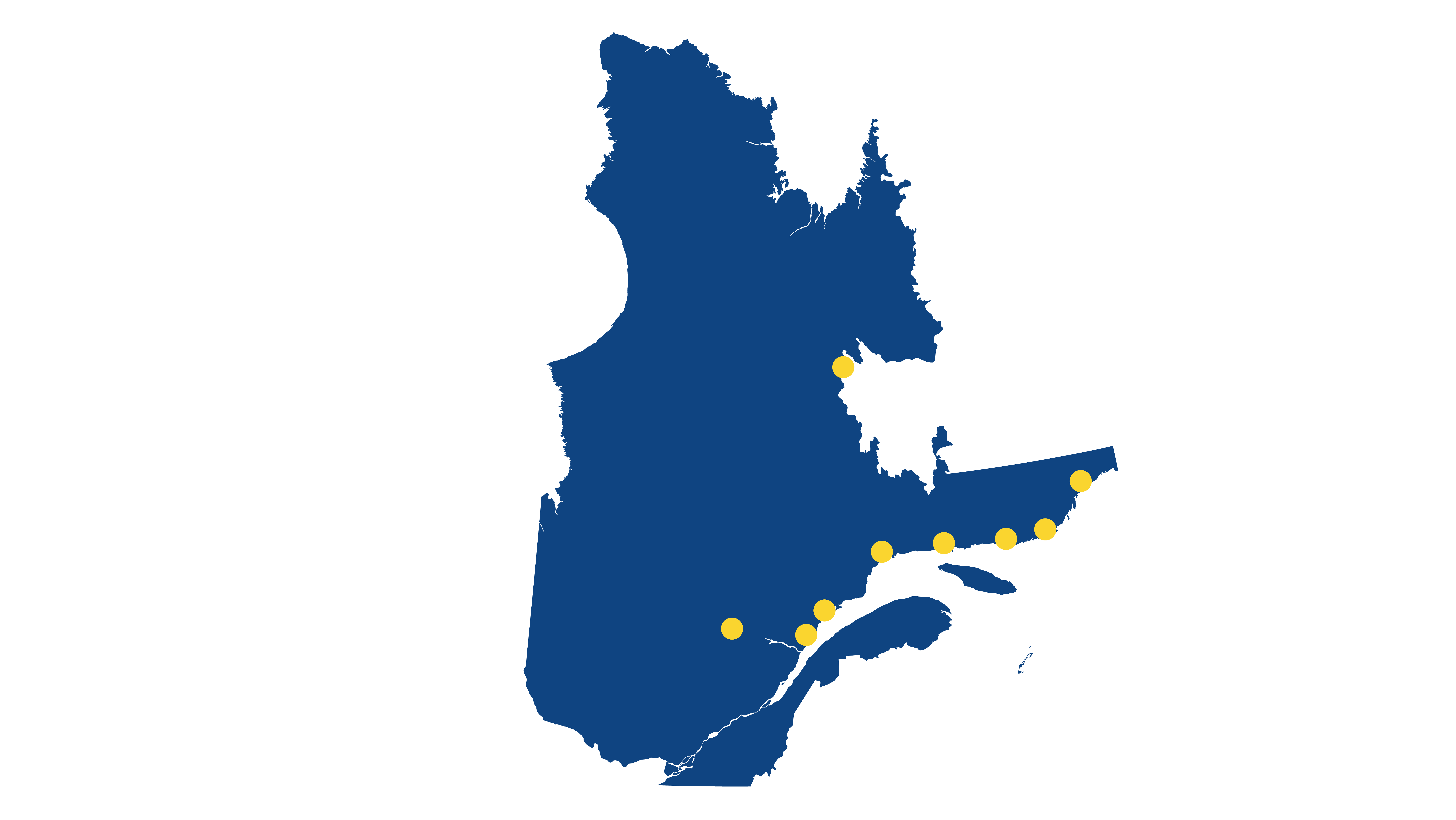
The ancestral territory of the Innu people is called “Nitassinan” (our land), covering the entire St. Lawrence River watershed between the Saguenay-Lac-Saint-Jean region and Labrador.

Territory

The ancestral territory of the Innu people is called “Nitassinan” (our land), covering the entire St. Lawrence River watershed between the Saguenay-Lac-Saint-Jean region and Labrador. A nomadic people living from hunting, fishing, and berry-picking, the Innu travelled across this vast territory in accordance with the seasons and its resources. Today, there are 9 Innu communities in Quebec and 2 in Labrador. In Quebec, Innu communities are on the North Shore and Saguenay-Lac-Saint-Jean regions.
Language

Innu-Aimun, the Algonquian language of the Innu people, has approximately 11,000 speakers. Like other indigenous languages, it has been spoken for thousands of years. It has an 11-letter alphabet and is distinguished by its polysynthetic structure: a single word can contain the information of an entire sentence. Dominated by verbs (75% of the vocabulary), the language reflects a descriptive and dynamic view of the world. Elders have a perfect command of the language, but a decline is noticeable among those under 40. Efforts are being made to preserve this linguistic and cultural heritage.

Population

The Innu Nation has a population of nearly 24,500, making it the most populous Indigenous nation in Quebec.

Discover other nations

Inuit

Traditionally, the Inuit way of life revolves around hunting (seals, caribou, whales), fishing, and gathering, for subsistence and craftsmanship— hides being used to make clothing and bones to make tools.

Learn more

Wendat

Since time immemorial, the Wendat have occupied the vast territory stretching from the St. Lawrence Estuary and Valley, all the way to the Great Lakes region.

Learn more

W8banaki

The ancestral territory of the W8banaki people (“people of the rising sun”) is called “Ndakina” and extends from southern Quebec to New England.

Learn more

Wolastoqiyik

Historically, the Wolastoqiyik occupied the valleys of the Wolastoq, also known as the Saint John River and its affluents, straddling the border that today separates New Brunswick, Quebec, and Maine.

Learn more

Eeyou

Traditionally, the Eeyou people are nomadic, and live in close harmony with nature.

Learn more

Atikamekw

The history of the Atikamekw is that of a nomadic people of the boreal forests, whose name means “white fish”.

Learn more

Kanien'kehá:ka

The Kanien'kehà:ka people, meaning “the People of the Flint”, are part of the larger Iroquois Confederacy.

Learn more

Naskapi

Extremely knowledgeable about a vast boreal territory, the Naskapi call their ancestral land “Nuchimiyuschiiy”.

Learn more

Anishinaabe

The Anishinaabeg are a large group of Indigenous people that span all the way from Quebec right through to the Rocky Mountains all the way down to Oklahoma, and up through to Ottawa.

Learn more

Mi'gmaq

The Mi'kmaq are among the first inhabitants of Atlantic Canada and occupy the coastal regions of Gaspé and the Maritime Provinces east of the Saint John River.

Learn more

Stay up to date with our newsletter

Be the first to know about events and updates!

By clicking Sign Up you're confirming that you agree with our Terms and Conditions.
Thank you! Your submission has been received!
Oops! Something went wrong while submitting the form.